Monday, 20 April 2015

Pakistan's challenges (Political aspects)

Pakistan's challenges (Political aspects)


Pakistan came into being in 1947. Since its beginning it has been bounded by innumerable inner as well as outdoor troubles. All these troubles appear to have grown to be fortune of our country. troubles like paucity, illiteracy, joblessness, provincialism, Baluchistan issue, radicalism, violence etc. are currently airs a great danger to our survival. regardless of being prosperous in natural resources we still are not capable to exploit them completely and moderately. Due to underutilization of these huge possessions, we are still a way behind in the pursuit of expansion. Not only inner troubles have kept the Government of  Pakistan occupied but also outer tribulations have always been a attach from blue for our country. It is a truth that every nation is facing troubles in one form or the other. But in the scenario of Pakistan, due to misconduct, troubles have been becoming permanent. It is mostly due to the maltreatment of the inner issues. Our country is trailing its true picture. This has end up in overseas involvements into our state affairs and has damaged our development.

The present era is the age of low intensity conflicts instead of typical wars. So, it's very necessary is the our internal dynamics, challenges and threats like national integration, ethnicity, narrow-mindedness, drug mafia, social group, dangerous economic conditions and economic discrepancy, and geographic vulnerabilities. The most internal fronts that are directly moving the policy of Pakistan are the followings; 

Political stability is one among the prime worry that Pakistan has commencing the terribly begin. No government to date might are able to complete its term. The incompetence of our leaders has invariably provided the military a golden likelihood to topple the electoral governments. each military ruler has taken over the facility with uncounted guarantees to the lots. however with the passage of your time, they solely prolonged their rule and served their unconditional interests.

Furthermore, judiciary has conjointly been instrumental in providing a legal cowl to the military rule the country. it's invariably supported the autocratic steps taken by the dictators below the “Doctrine of necessity”. Such a weak and incompetent judiciary has ne'er allowed the democracy to flourish on our soil. that the absence of democracy has born to varied different problems/threats.
Other challenges aspects will be posted in other sessions. If you are looking for deep down information of any political issue do visit www.pakvoter.org


Thursday, 16 April 2015

Challenges and Controversies faced by PPP


Pakistan peoples party is one of the most biggest political parties in Pakistan, which has presented some renowned leaders in the history of Pakistan and since its establishment it has faced some serious challenges and controversies which are mentioned below.

Lost left
Seeing that the 1990s, the Pakistan Peoples Party (PPP) has been beneath severe disparagement even within the associates and the leftists in the state, prominent the charges of large-scale bribery. The leading leftist, Nadeem Paracha, affirmed that since 1977, the PPP policy has been malformed into centre-right stand, while in 1977 general elections in Pakistan, the PPP policy did not mentioned the "communism". Throughout the 1973–75, the PPP fundamental ultra-left and socialist led under Mirage Khalid and the moist wings under Khalid Syed were eliminated by the PPP to make sure the political shore up and existence between the dominant Sindh's feudal lords and Punjab's landed elite, Paracha stating it the PPP has "lost left".

While leading left-wing journalist, Mehdi Hasan remarked that PPP is "not a worldly party", first declaring Ahmadiyya people as non-Muslims in the line of the succeeding parliamentary alteration, secondly proscription the utilization of liquor; thirdly, the PPP affirmed Friday as holiday to prevail the support of religious elements, Mehdi Hasan quoted.

Cyber attacks

The Chairman of PPP Bilawal Bhutto Zardari led a gathering on 19 September 2014 in Multan, Punjab, where he purportedly quoted: "the [PPP] would take back whole Kashmir for his state
Bhutto accentuate on his ending of the speech: "I will take back Kashmir, all of it, and I will not leave behind a single inch of it because like the other provinces, it belongs to Pakistan...(.)"
On urgent basis, a group claiming themselves the Indian Hackers Online Squad swaps the PPP's official website's homepage with post mocking Bhutto for his comments, and alleging that "will never get Kashmir".

The post read on PPP's official website: "To Citizens of Pakistan, Pakistan's military, PPP and Specially Mr. Bilawal Bhutto. Without any Violence, Let Me tell you that Pakistan will never get Kashmir. This is the Truth. You Have to Accept it."

Bilawal Bhutto Zardari's Kashmir comment made him a knock against jokes on Twitter and in Indian media.

Internal opposition and factionalism
Since 1990s, the factionalism has grown in the party when Murtaza Bhutto returns to Pakistan. Differing with Benazir and Asif Ali Zardari's political philosophy developing the party, Bhutto come apart and fashioned the other controlling yet more leaning towards left wing faction, PPP (Bhuttoist) in 1995. Having row with Benazir Bhutto in 1999 over the party leadership, Aftab Sherpao tearing from the party and shaping the PPP (Sherpaoist)—a more reformist with democratic schema.

Factionalism persists in 2011 when PPP dismiss Mahmood Qureshi over the happening that occurred in Lahore, though Qureshi did not fixed but defecting to PTI which is centrist and third way party. One more leftist leader, Malik Ali Khan also acquiescent from the PPP, saying that "they did not concur with how President Zardari was leading the party chiefly with view to an coalition with centre-right PML (Q) and the foreign policy.

In 2012, the PPP's powerful leader, Zulfiqar Mirza, relinquish from the party regardless of urgings on amidst discrepancy with Asif Zardari's headship and policies with regards to contact with liberals MQM in Sindh. Reckoning with their separation, the communist politicians felt that the party had now moved away from the basic thoughts it was established on by Zulfikar Ali Bhutto in 1967.

 For more information related to any political parties of Pakistan, do visit www.pakvoter.org


Wednesday, 15 April 2015

2008 history of PPP


Looking at the recent history of one of the historical party of Pakistan which is full of tragic details in their history, another big disastrous news to PPP followers falls when the most functional and first former women PM Benazir Bhutto in the history of Pakistan was murdered, when she was conducting elections campaigns in 2007.

As we all already knows that BB was the daughter of Z.A Bhutto and after his father death he raises his party until she was exiled from the country. After her come back to the country in 2007, the followers welcomed her graciously but soon after her return she faces numerous life threat. The saddened event occurred on 11th of May when she was coming from airport towards her house among her many followers, from there her bad time started where her way was attacked by terrorist by suicide bombings. In that place, her many followers died but she survived. But when conducting an election campaign on 27th of Dec 2007 she was again attacked but unfortunately she didn’t survived this time and the whole nation mourned her death for several days. Soon after her death, Asif Ali Zardari declared their son as the new chairmen of PPP.

The 2008 general elections in Pakistan which were planned to be held in January were delayed until 18 February. The PPP won the significant triumph on among all political parties in Pakistan, having a force of general seats 121 from all provinces in the Parliament, at the same time as the centre-right, Pakistan Muslim League (N) secured second place, running to secure 91 seats from country-wide. In 2008, the co-chairman Asif Ali Zardari proclaimed to finish the fourth dictatorship when he stated: "Pakistan was on its way of ridding dictatorships forever", and plead to the PML (N) leader, Nawaz Sharif, to outline an alliance scheming over half the seats in Pakistan's 342 seat parliament.

Asif Ali Zardari and Nawaz Sharif officially signed the agreement on this on 9th of March 2008.

Titled the PPP-PML summit declaration, the shared declaration both parties decided on the restoration of judges oust through the emergency rule enforced on 3 November 2007 by General Pervez Musharraf in 30 days following the new federal government was fashioned. On 28 March, the PPP assigned Yousaf Raza Gillani as the new PM and formed alliance rule with PML (N) in Punjab, Awami National Party in KPK, JUI(F) in Baluchistan and MQM in Sindh. On other hand, the PPP declared the private mandate in Gilgit-Baltistan andKashmir. though, this pact was afterwards was dishonored by PPP government, after which PML(N) leaved from alliance and federal government.

Asif Ali Zardari was nominated for the coming presidential elections of that year by his party. After that he got 481 votes out of 700 and hence he become the President of Pakistan.

On April 2010, president Zardari willingly give up his political and presidential authority to PM Gillani and the parliament, and during 18th amendment to the Constitution of Pakistan, Zardari relocate the right of government and political appointments, and powers to put into effect the right of government to prime minister Gillani as part of country's road to parliamentary democracy. although rising disapproval, it has managed to preserve a great vote bank in deeper Sindh and South Punjab. On national front, it is currently competing against Pakistan Tehreek-e-Insaf and Pakistan Muslim League (N). On 22 June 2012, the PPP nominated Raja Pervez Ashraf was elected as the new Pakistan PM.

But it didn’t ended here, the PPP government was badly failed and due to this several protest and long marches have been made.

For more detail view of any political happening inside Pakistan, do visit www.pakvoter.org


1970 General Election and PPP


1970 General Election and PPP

From 1967 to 2015 PPP has faced numerous difficulties, having assassination of their leaders PPP still hold out to be the 2nd most voted political party in Pakistan. the ups and downs of the party can be viewed through the following table, which will highlight the General elections in Pakistan through 1970 to 2013 and the seating, party leader and parliamentary position of the PPP.

General Elections
Seating Graph
Presiding chair of the party
Parliamentary position
1970
81/300
Z.A Bhutto
In Government
1977
155/200
Z.A Bhutto
Martial Law in effect
1985
-
Nusrat Isphani
-
1988
94/247
Benazir Bhutto
In Government
1990
44/207
Benazir Bhutto
In opposition
1993
89/207
Benazir Bhutto
In Government
1997
17/207
Benazir Bhutto
In opposition
2002
62/207
Amin Fahim
In opposition
2008
124/342
Benazir Bhutto
Yousaf Raza Gillani
In Government
2013
47/272
Billawal Bhutto Zardari
In opposition
                                                                                                
After its establishment, the party gained distinction at an instantaneous, magnetizing the poor bunch peasants and workforce, and students all through in West Pakistan. The democratic socialists and Bhutto himself knocked a gesticulate of annoyance and showed sturdy resistance against Ayub Khan, leading the civil chaos, defiance, and mayhem that forced Ayub Khan to detained talks with Bhutto who would later opposed the Six point movement, offered by Bengali leader Sheikh Mujibur Rahman. The nonstop argument, and pressure forced Ayub Khan to quit from the presidency in 1969, leading to burden of martial law by Army Commander General Yahya Khan after promising to seize elections in two years. throughout this time, the Peoples Party strengthen its sustain in West Pakistan, systematizing itself and gaining prop up from poor masses in West Pakistan. Its communist catchphrase Roti Kapra Aur Makaan (English: Food, Cloth, and Shelter) and "all supremacy to the people", added popularize the party and the fame that crop up Bhutto and the Peoples Party.

During the 1970 parliamentary elections, the Peoples Party participated with complete force, originally conquering the far-right faction and the centre-right forces in West-Pakistan, though the Peoples Party was resolutely beaten by the moderate democratic Awami League in East-Pakistan. throughout the election movement, the party's renowned leftist philosophers and communists rational, such as Malik Meraj, JA Rahim, Meraj Muhammad, Mubashir Hassan, and Zulfi Bhutto himself demanded a great rage to the public over numerous political subjects. anxiety arisen with Peoples' League and Sheikh Mujibur Rahman, the ideological disparity added make amid bricks of abhorrence towards each other. The circumstances reached to a pinnacle in 1970 where Awami League held 160 seats out of 300 where the Peoples Party winning the 81 of 138 seats owed to West Pakistan in the National Assembly.

Bhutto decline to permit Rahman to become the prime minister of Pakistan, and eminently calling "break the legs" if any self-ruled socialists of Peoples Party tried to be present at the introductory meeting. in its place, he presented the idea of having two prime ministers for both wings. At his proposals he received heavily criticism from East of Pakistan. After then Bhutto conveyed his message from Dr. Mubashir Hassan, whereupon it was decided to have a coaillited government with Bhutto as president and Mujib as PM. Although, these developments were not publicized and the Military was totally unaware of the fact. Quickly after military launch, the circumstances changed in both wings which created differences among both wings.

Bhutto and Peoples Party gave condemnation to Yayha Khan's exploitation of the circumstances which led the arrests of Bhutto and members of Peoples Party who apprehended with Mujibur Rahman in recognized Adiala Jail. This was followed by Indian involvement which led the harsh crush of Pakistan Armed Forces and Pakistan itself, after East-Pakistan gained impetus and became Bangladesh in 1971.

For more detailed information about any political parties in Pakistan, do visit www.pakvoter.org


PPP Political Journey


PPP Political Journey

Pakistan peoples party commonly known as PPP is one of the biggest and leading political party in Pakistan. It was founded in 1967 and ever since it had been a main and dominant political left wing force in Pakistan. The control supremacy of the party is founded greatly in Sindh, and the party is ruled by the members of the Bhutto-Zardari family.

Since its creation, PPP comes into power as the Government of Pakistan on five different times in the following years:
  • 1970
  • 1977
  • 1988
  • 1993
  • 2008


Formerly viewed as the most dominant political party in the country, it is the biggest opposition party in the National Assembly , primary the united leftist coalition in the Parliament. though, the party uphold its mass power of Senate and prevailing party in Sindh and two independent regions: the Azad Kashmir and Gilgit-Baltistan.

Zulfiqar Ali Bhutto being the first chairmen of the party with the main slogan as Roti, kapra and Makan (Food, Cloth and House) decided to remove poverty from Pakistan and to provide its nation the basic necessities of their livelihood. The major policies of the party were stated as that “Islam is our religion, Democracy is our politics, socialism is our economy and power lies with the people.”

The policy acknowledged the party's eventual objective, major aim and raison d’ĂȘtre as being the triumph of an democratic and "egalitarian people", which was supposed to be achievable only through communism. It called for "spot on egalitarianism of citizen's alliance under the decree of classlessness", inside "an order of communal and fiscal fairness." In 1968, a huge publicity agenda was commenced by the party, opening in Punjab. Bhutto's agenda unswervingly beleaguered the country's deprived masses. The left-wing sloping slogan, "Land to the Landless", proved appealing to the peasants and labor class, as the party assured not only to eliminate the primary feudalism that had beleaguered the country, but also to reallocate lands amid the landless and the peasants. The working class and labor group hurriedly congregate to the party, deem it to be a party keen to the annihilation of entrepreneurship in the country. Democracy is our Politics; Socialism is our Economy; Power Lies with the People", was written by Bengali socialist J. A. Rahim, and first concern on 9 December 1967.

The adolescent university students and teachers who frequently irk the burden of Ayub Khan's tyrannical government through his decade-long regime were assured a recovered prospect with enhanced enlightening and occupation opening. Many other affiliates of people who had felt muffled and subdued by the press-control and serious bowdlerization adept by the controlling Khan government also tied the new party. The party's policy also fascinated the country's abundant sectarian minorities, who hurriedly united the party.

Ultimately, the socialist-oriented slogan Roti, Kapra aur Makan (lit. "food, clothes, and housing"), became a countrywide cry for the party. By the 1970s, the PPP had turn into the biggest and most powerful leading communist and autonomous body in the state. The party in print its thoughts in its the media, such as "Nusrat", "Fatah", and "Mussawat".

More related information can be get through Pakvoter, with the help of which we can view any political happenings in Pakistan and related information about any political party in Pakistan and their history.


Tuesday, 14 April 2015

PTI


The political journey of Pakistan Threek-e-Insaaf (PTI) rises during the regime of Pakistan People’s Party (PPP) in 2008. The Government was failed to achieve any triumphs during their regime. This started corruptions to rise in the society and terrorism augmented.

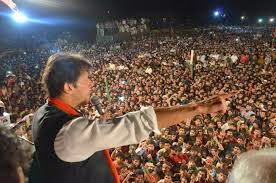
By witnessing such crisis in Pakistan, khan started his campaigns to aware it people that what is happening inside Pakistan. By looking the efforts of Imran khan the public started following him, which was witnessed by the whole nation. The political crowds arranged by PTI were so enormous and fully functional, thorough which he develops strong relationships to its followers.  By his strong efforts, PTI has become the largest party by membership having 10 million members in Pakistan as well as in abroad.

Looking at the general information of the party, where its slogan is Justice, humanity and Self Esteem. The head quarters of PTI lie in G-6/4 ISB. PTI has three wings of the party namely student wing, women wing and youth wing.

In 2013 general elections in Pakistan, PTI gained following seats in different assemblies

  • 35 seats out of 342 seats in National assembly
  • 28 seats out 371 seats in Punjab assembly
  • 56 seats out of 124 in KPK assembly
  • 4 seats out of 168 seats in Sindh assembly
  • None seats at Baluchistan assembly
  • 1 seat out 41 in AJK legislative assembly

Overall PTI secured 3rd position in General elections in Pakistan. In recent Senate election 2015 PTI gained 6 seats out of 104 seats in the house.

Policies of PTI include areas of Social, Education, Political, Defense, Drone Bombings and Foreign Affairs.

As a radical party that has freshly arrived on the nationalized stage, the PTI has called for main societal, financial, and political reorganization. The PTI's beliefs are derived primarily from Allama Iqbal's visualization of a self-sufficient contemporary democracy resulting from the steering values intrinsic in Islam.

Other related and detailed information related to other political parties of Pakistan or for any other political happenings in Pakistan, do visit www.pakvoter.org


Monday, 13 April 2015

PTI Political Journey

Pakistan Tehreek-e-Insaaf

Starting with political party’s journey here I am discussing the political journey of one of the very famous parties i.e. Pakistan Tehreek-e-Insaaf nowadays and that is heavily followed by young generation too. In back times we have seen youth followers when Z.A Bhutto started its movement. But currently we are watching that how our youth is actively participating in political movements of the country due to the efforts put by their parties leaders, who are trying somehow a different approach that is attracting the public. The followers are not just from a specific age group but it is receiving its followers from different age groups.

Looking at the background of PTI, which came into being on 25th April 1996 by a veteran cricketer turned politician “Imran Khan”.  It is difficult to establish your political party at such big level when there is family based political parties in Pakistan, that have established their reputation over years and years. Somehow it affected PTI for many years as it didn’t gain popularity. But 2012 turn to be lucky for PTI as it gain much more followers and well known leaders from many big parties like Shah Mehmood Qureshi From PPP and Javaid Hashmi from PML(N).

Pakistan Tehreek-e-Insaf's constitution was accepted on 24 January 1999 by the Central Executive Committee in Lahore. In October 2002, Khan holds for office in the National Elections and became a member of parliament from Mianwali, his home town. Khan, nonetheless, remained severely critical of the whole political order of Pakistan, which he believed fraudulent, inept, and morally bereft of any of the naissance ideologies of Pakistan. In dissent, Khan began a proletariat movement to raise attentiveness about his political party.

After Benazir Bhutto was murdered in 2007 and Nawaz Sharif comes back from self-exile in Saudi Arabia, demands augmented upon President Musharraf to embrace democratic elections. PTI, in concurrence with many political parties, united the All Parties Democratic Movement, which was conflicting to more martial rule.  That year general elections turned to be in the favor of Pakistan Peoples Party (PPP). And that election was boycotted by PTI.

Throughout the Asif Ali Zardari's government, Imran Khan's fame ascends amid dissatisfaction with the decree supervision domestic and foreign strategy. PTI's crucial plea is its qualifications as a populist party. PTI has sworn to fashion a really self-governing, independent Pakistan which is liberated from arrears, enslavement, and dispute if chosen to power. In Pakistan: A Personal History, PTI chairman Khan row that a self-centered and crooked ruling elite, fabricated of primarily politicians, feudal leaders, and military bureaucrats, has shattered Pakistan and brought it to the edge of debacle. PTI uphold that it symbolizes all Pakistanis, despite of religious, ethnic, linguistic, and provincial backgrounds.

In 2013 General elections PTI to be the 3rd most voted political party of Pakistan. The further details of this Party and other parties will be discussed in next sessions. For more related information or to know your political candidate or you want to see political parties profile, do visit www.pakvoter.org.